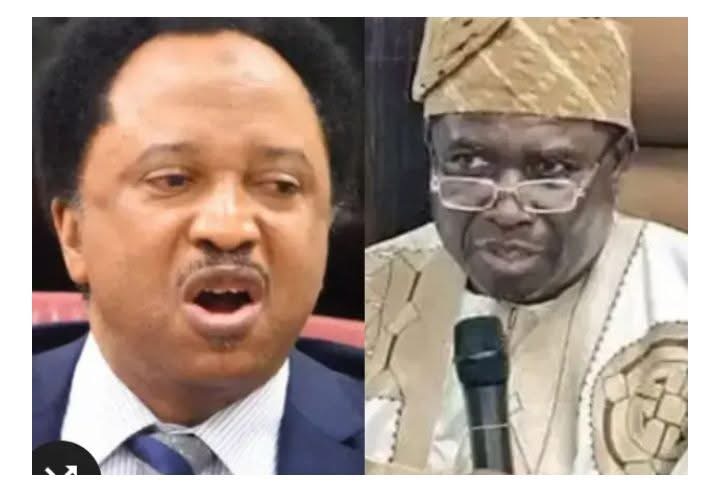

Former federal lawmaker, Senator Shehu Sani, has offered a detailed perspective on the political calculations and economic consequences surrounding the removal of petrol subsidy in Nigeria, arguing that the current administration has taken a markedly different approach from its predecessors.
Sani examined the long-standing reluctance of past governments to eliminate the subsidy, contrasting it with what he described as the decisive stance of the present leadership under President Bola Ahmed Tinubu.
According to the former senator, previous administrations consistently avoided removing the subsidy due to concerns that extended beyond economics.
He explained that leaders were often constrained by fears of public backlash and the risk such a move could pose to their continued hold on power.
“And why other governments in the past retreated or were afraid of removing subsidy was for two reasons,” Sani said. “One is the social and political implications of it. And second is their own survival in office. But he decided to shove aside all these fears and then do it.”
Sani’s remarks highlight what he sees as a break from a pattern of political caution, where subsidy removal was viewed not only as an economic decision but also as a potential trigger for civil unrest.
In his view, earlier governments opted to maintain the policy largely as a means of preserving stability and safeguarding their positions.
He added that the responsibility for evaluating the impact of the subsidy removal now lies with the Nigerian people, who are directly experiencing its effects on daily life and the broader economy.
“So now it will be for Nigerians to judge him whether what he has done is right,” he stated.
Beyond the political dimension, Sani also addressed the financial implications of ending the subsidy regime. He argued that the funds previously used to support petrol prices have not vanished but have instead been redirected within the system, particularly to sub-national governments.
“But what is subsidy?” he asked. “You remove subsidy and the money just doesn’t go off air. It is transferred to the sub-nationals.”
Expanding on this point, Sani pointed to a significant increase in federal allocations distributed among the various tiers of government. He noted that while allocations in the past were typically in the range of hundreds of billions of naira, recent figures have risen into the trillions.
“When you look at federal allocations in the past before the coming of Tinubu, it was 400, 500 billion that are been shared. But now they are getting in trillions,” he said. “So there are more money to the states and then people are paying the price for it.”
His comments suggest a shift in the fiscal landscape, where increased revenues at the state level are occurring alongside higher living costs for citizens.
About the Author