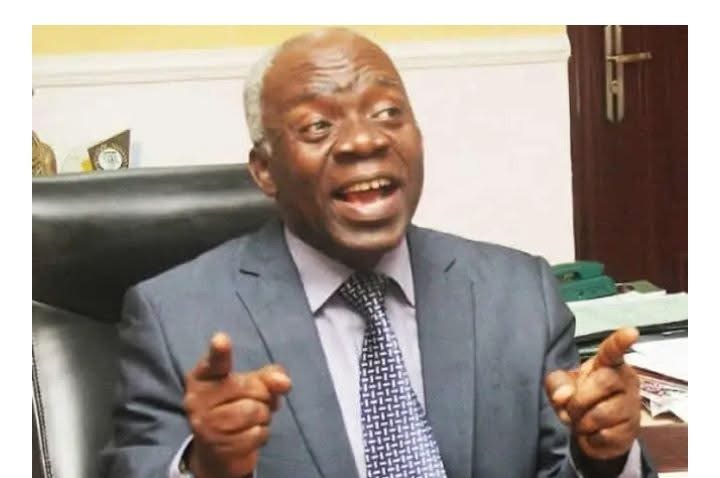
According to a report by Punch on Thursday, April 2, 2026, human rights lawyer Femi Falana and the Aare Ona Kakanfo of Yorubaland, Gani Adams, have raised concerns about the future of Nigeria’s democratic process, warning that the country could face a situation where only one presidential candidate emerges in the 2027 elections.
They expressed these concerns during the fifth Comrade Yinka Odumakin Memorial Lecture held at the Airport Hotel in Ikeja.
The event brought together labour leaders, activists, and political stakeholders to discuss governance, democracy, and current national developments.
Among those present at the lecture were the President of the Nigeria Labour Congress, Joe Ajaero; activist and publisher of Sahara Reporters, Omoyele Sowore; and Senior Advocate of Nigeria, Olumide Fusika.
The event was hosted by the President of the Oluyinka Odumakin Foundation, Joe Odumakin.
Other attendees included the Executive Director of the International Press Centre, Lanre Arogundade, as well as activists such as Agba Jalingo and Richard Akinola.
While delivering the memorial lecture, Falana focused on the role of the judiciary in political party affairs.
He expressed concern that court orders and conflicting judgments are increasingly influencing the internal structures of political parties.
According to him, such developments could weaken party systems and reduce the range of choices available to voters.
He explained that if the trend continues, it may create conditions where only one political party is effectively able to present a presidential candidate in future elections.
Falana’s remarks were made in the context of recent developments involving the Independent National Electoral Commission (INEC) and the leadership dispute within the African Democratic Congress (ADC).
The commission had announced that it would no longer recognise certain factions within the party, citing a Court of Appeal judgment that directed it to maintain the status quo pending the resolution of a legal challenge.
This decision has become part of wider discussions about the interpretation of court rulings and their impact on political processes.
He said, “We must stop agonising and start organising in the interest of our people and democracy.
About the Author