The Ikorodu Division Question: Is 2027 the Year for Lagos’ ‘Silent Powerhouse’ to Lead?
By: Suraj Abdulgafar.
Fly Cable News.
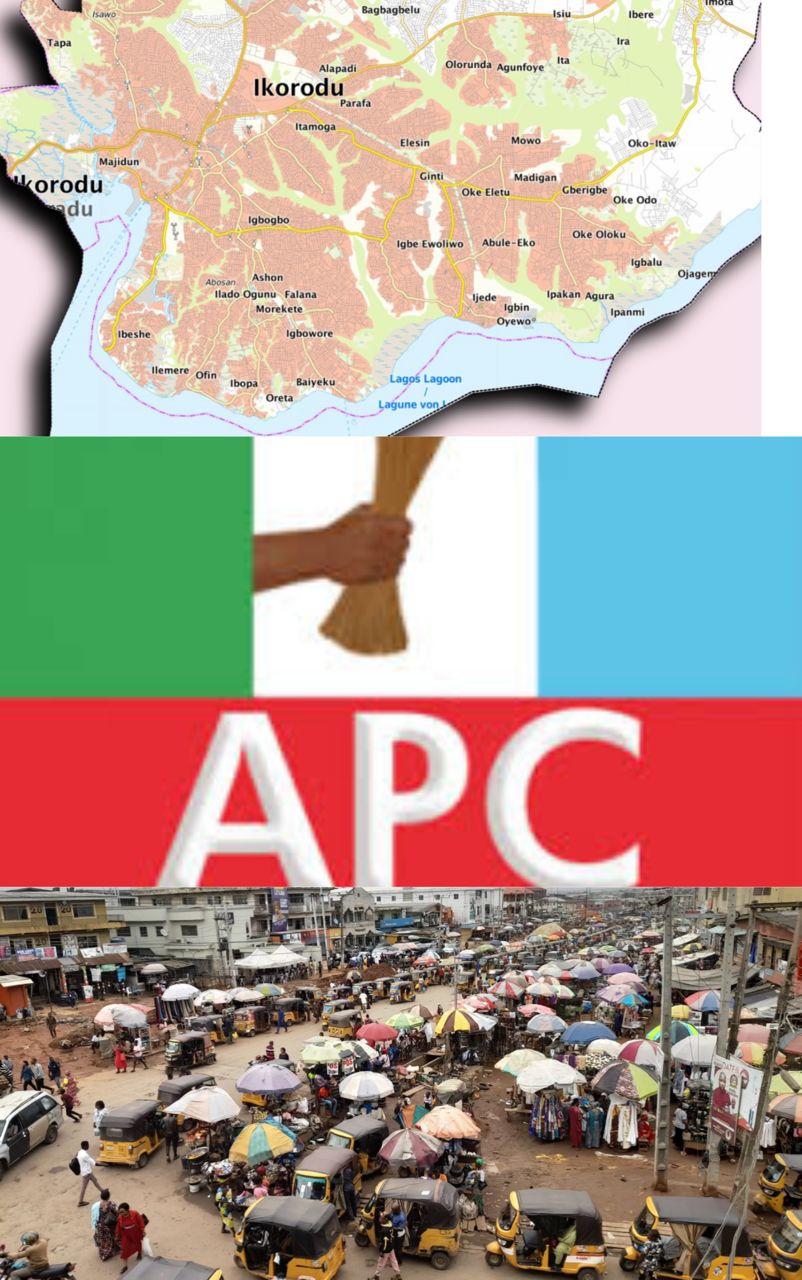
As the 2027 gubernatorial race in Lagos State intensifies, a familiar debate over zoning and representation has resurfaced. When is Ikorodu Division getting the chance to rule Lagos State under a democratically elected government? Despite its political loyalty, sociocultural importance and immense human capital, Ikorodu Division remains the only division yet to occupy the state’s highest office, raising critical questions about the fairness of the current “reward system” within the ruling All Progressives Congress (APC).
Lagos is traditionally anchored by its five administrative divisions: Ikorodu, Badagry, Ikeja, Lagos Island, and Epe (IBILE), the political reality suggests a skewed distribution of power in which Ikorodu is persistently ignored. Therefore, the conversation must be amplified within and outside the division. The glaring inequity must move from whispers in political caucuses to the forefront of public discourse: the systemic marginalization of the Ikorodu Division must be denounced by all who feels genuine pride in the division.
The gubernatorial zoning permutations of the APC in Lagos State which prioritizes the three senatorial districts of Lagos Central, East, and West appears to increasingly sideline Ikorodu Division. The arrangement is blatantly flawed when viewed through the lens of grassroots equity. While other divisions have enjoyed repeated cycles of leadership, Ikorodu remains the only administrative pillar yet to be entrusted with the governorship. This is not a lack of human capital. The division boasts a formidable lineup of resourceful, experienced, and highly educated leaders who have served the nation with distinctions. From the banking and legislative prowess of Senator Tokunbo Abiru and the corporate, legal, legislative and grassroots developmental strides of MHR Jimi Benson, to the legal acumen of Barrister Ajenifuja, the international diplomatic weight of Hon. Abike Dabiri-Erewa, and the administrative experience of former Commissioner Hon. Kaoli Olusanya, among others, Ikorodu Division’s “bench” is as deep as any administrative division in the federation.
Despite this wealth of talent, the political maths continues to shortchange the region. Structurally, while other divisions benefit from multiple local governments that amplify their representation at the federal level, Ikorodu Division’s configuration limits its voice. This imbalance is even more pronounced in state appointments. It is a bitter pill for the people of Ikorodu Division to swallow when certain divisions secure upwards of five cabinet commissioners while Ikorodu Division is relegated to a single representative. This is despite the fact that Ikorodu Division boasts of burgeoning urban centers with a huge population that translates directly into political might.
The 2023 Presidential election served as definitive proof of Ikorodu Division’s loyalty and significance. Amidst a tough political climate, the division delivered a massive 50,453 votes for the ruling APC, outperforming several areas that hold significantly more political appointments and even outshining regions where the incumbent leadership has its strongest roots. This performance raises a troubling paradox: how can a division that delivers the highest “return on investment” at the polls receive the lowest dividends in governance? Having fewer political appointees at both state and federal levels directly undermines Ikorodu Division’s capacity to canvass and deliver even greater margins, yet the division continues to punch above its weight.
The marginalization is not limited to political and boardroom positions and appointments; it is visible in the very dust of the streets. In the realm of governance, Ikorodu Division often faces a pattern of delays and excuses regarding major state projects. While economic contributions from the division to the state’s coffers are massive, the corresponding infrastructure remains largely stagnant. This raises a critical question for the leadership of the APC: if the party’s reward system is built on merit and hard work, why does a particular local government stay on the ballot for three consecutive cycles, occupying the seat of power for 12 years, while Ikorodu Division is told to wait?
The narrative that there is no “credible or competent” candidate in Ikorodu Division is a tired myth that no longer holds water. As 2027 approaches, the residents and stakeholders of the division are no longer asking for a favour; they are demanding recognition of their effort. To continue to overlook Ikorodu Division is to risk alienating the most loyal engine of the Lagos political machine. The time has come for a system that recognizes that the “Centre of Excellence” cannot truly be excellent until every one of its five fingers is given an equal opportunity to lead.
Ikorodu Division lokan!
About the Author